
You’ve probably heard of mazes. But a labyrinth is something entirely different — and its benefits for mental clarity, stress reduction, and spiritual insight are surprisingly well-documented.
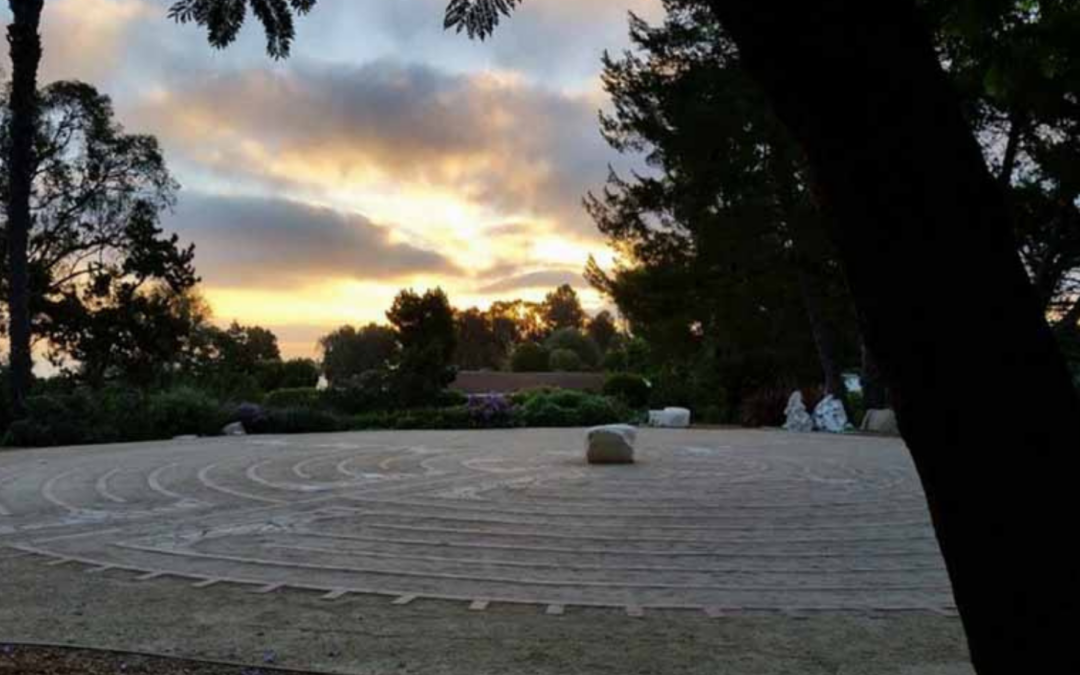
At Mary & Joseph Retreat Center, our Labyrinth Bonaventure is one of the most beloved features of our grounds. Visitors regularly describe their time on the labyrinth as among the most meaningful moments of their retreat. Here’s why.
Labyrinth vs. Maze: An Important Distinction
A maze is a puzzle. It has dead ends, false paths, and the goal is to find the exit. A labyrinth has a single winding path that leads to a center and back out again. There are no wrong turns. You cannot get lost.
That design difference changes everything about the experience. Because navigation requires no effort, the mind is free to settle. The body moves at a slow, steady pace. Attention turns inward.
The labyrinth is, at its core, a moving meditation — and one of the most accessible forms of contemplative practice available.
A Brief History of the Labyrinth
Labyrinths have appeared in nearly every major world culture for over 4,000 years. The most famous in the Christian tradition is the labyrinth embedded in the floor of Chartres Cathedral in France, built around 1200 AD. Medieval pilgrims who could not make the journey to Jerusalem would walk the Chartres labyrinth as a form of spiritual pilgrimage.
Today, labyrinths are found in hospitals, hospices, retreat centers, parks, churches, and universities — all over the world and all traditions. Their resurgence in recent decades reflects a growing recognition that contemplative practices rooted in bodily movement meet needs that purely cognitive or sedentary practices cannot.
What the Research Says
The benefits of labyrinth walking have been studied in clinical and educational settings, with consistently positive findings:
Stress reduction. Research with healthcare professionals found that labyrinth walking significantly reduced perceived stress levels after a single session. The rhythmic movement, combined with removal from stimulating environments, activates the parasympathetic nervous system — the body’s “rest and digest” mode.
Improved emotional regulation. Several studies have noted reductions in anxiety and improvements in mood following labyrinth walks, even in populations dealing with significant mental health challenges.
Enhanced creative thinking. The shift in brain state produced by slow, rhythmic walking tends to surface insights and ideas that are harder to access in more stimulated states. Many people report unexpected clarity on problems they’ve been wrestling with.
Support for grief and processing. Labyrinth walks are widely used in bereavement programs and hospice settings because the physical act of walking — entering, reaching center, returning — can serve as a powerful metaphor for the grief journey itself.
How to Walk a Labyrinth: A Practical Guide
There is no single right way to walk a labyrinth. But here are some guidelines that many people find helpful:
Before you enter: Pause at the entrance. Take a few slow breaths. Set an intention — a question you’re sitting with, something you’d like to release, or simply an openness to whatever arises.
On the way in: Walk slowly. Let your attention follow your feet. If thoughts arise, let them come and go without engaging them. You may find it helpful to use a simple repeated phrase or prayer.
At the center: Pause as long as you like. This is the heart of the labyrinth — a place to receive, rest, or simply be still.
On the way out: Many people find the outward journey feels different from the inward one — a sense of returning, re-engagement, or readiness. Notice what has shifted.
After: Give yourself a few quiet minutes before moving on. Journal if you feel moved to. Many people want to rush back to activity; try to resist that impulse.
Visiting the Labyrinth Bonaventure
Our Labyrinth Bonaventure at Mary & Joseph Retreat Center is available to visitors during regular business hours, whether or not you’re participating in a scheduled retreat or event. Guided labyrinth walks are also offered as part of our retreat programming.
The labyrinth is set amid our beautifully maintained grounds, surrounded by the natural beauty of the Rancho Palos Verdes hills. Many visitors combine a labyrinth walk with time in our gardens — an hour or two that costs nothing and offers something that’s increasingly rare: genuine stillness.
All are welcome.
Visit the Labyrinth Bonaventure. The labyrinth is open to day visitors during business hours. Whether you’re joining us for a retreat or simply stopping by, you’re welcome to walk. Learn more about our grounds →
Mary & Joseph Retreat Center | 5300 Crest Road, Rancho Palos Verdes, CA 90275 | (310) 377-4867